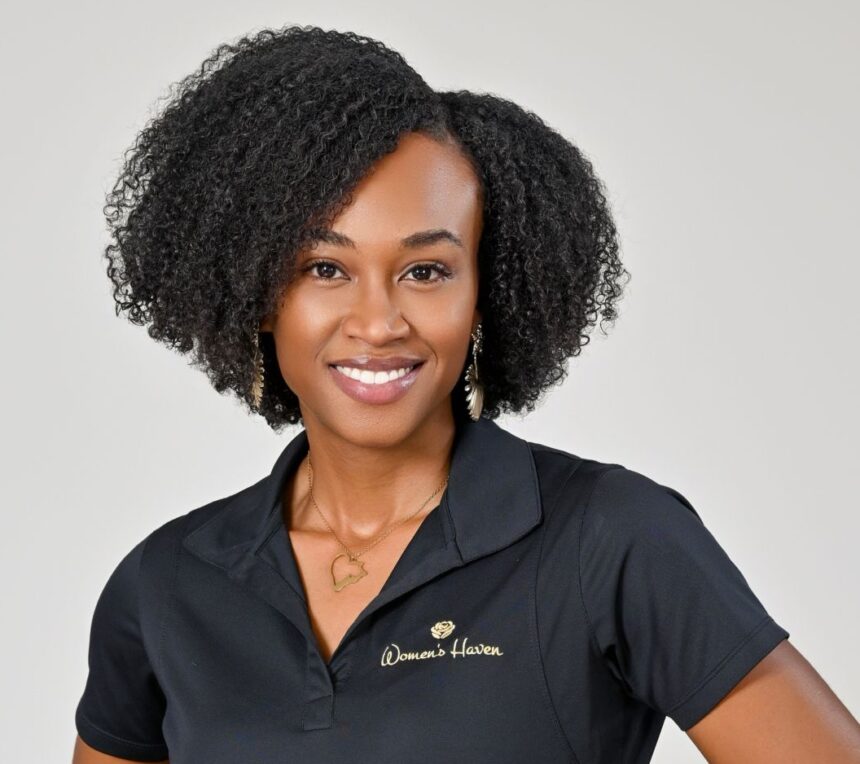
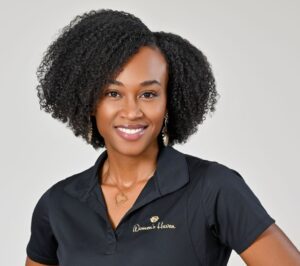
Melesia Adderley couldn’t find organic feminine care products in the Caribbean. Eight years later, Women’s Haven is in fifteen countries, over a hundred stores, and still entirely self-funded.
Key Takeaways
-
- Melesia Adderley founded Women’s Haven in 2017 after discovering that organic feminine care products, widely available in the United States and Europe, were virtually nonexistent across the Caribbean.
-
- Women’s Haven now operates in fifteen countries through a distributor model in which local women own one hundred percent of their profits, with Adderley taking no commission on their sales.
-
- Eight years in, Women’s Haven received its first institutional funding from the Caribbean Development Bank’s SheTrades programme in 2025, having bootstrapped entirely on personal savings until that point.
Adderley Founded Women’s Haven After a Personal Discovery Changed How She Saw the Shelves
In 2016, Melesia Adderley was experiencing what millions of Caribbean women quietly absorb every month: persistent menstrual discomfort that most had accepted as simply part of life.
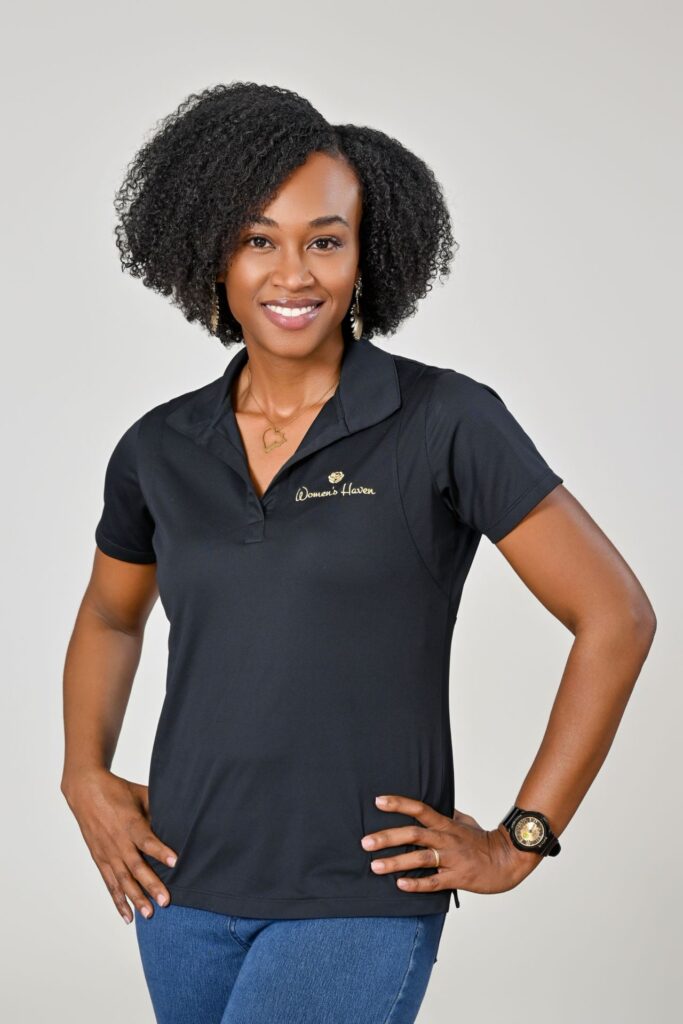
When she came across organic feminine care products, her first instinct was skepticism. She waited six months before trying them. Her period went from seven days to three.
“I cannot unknow what I now know. I needed to tell other women about it.”
What followed was not an immediate business decision. Adderley started a social media page. She educated women. She imported extra stock and sold it from her personal supply. Women came back asking for more. She became, as she puts it, the pad girl.
A woman in the Bahamas found her online and reached out. Together they made the Bahamas Women’s Haven’s first expansion.
The Manufacturer Said No. She Built Her Own Brand Instead.
As Women’s Haven grew, women told Adderley the products were too expensive. Shipping costs and store markups were pricing most Caribbean households out. She reached out to the manufacturer she was distributing for and proposed a collaboration built specifically for the Caribbean market.
They were not interested.
“Who are you? You’re not Forbes. You’re not CNN.”
The rejection was clear: a Caribbean woman distributing in island markets was not the kind of partner they were building toward. Adderley heard the door close and decided to stop knocking on it.
“Since y’all don’t wanna give me a seat at your table, I think I have to go build my own.”
She spent a year researching manufacturers from scratch. No mentor. No government programme. No template from anyone who had done this before in the region. She found a manufacturer she wanted to work with, then hit minimum order quantities in the hundreds of thousands of units per size. She kept the relationship warm with small updates until, eventually, they offered her a shot below the MOQ.
She invested every cent of personal savings she had.
“I said to myself: I have two daughters. If this doesn’t work, we’re going to have pads for the rest of our lives. We’ll be the pad girls. This could still be a win-win.”
There Was a Month She Could Not Pay Her Mortgage
Adderley was running Island Grub, her food delivery startup, alongside Women’s Haven when the financial pressure peaked.
She called her bank and asked for two extra weeks on her mortgage. She shut Island Grub down, folded its logistics infrastructure into Women’s Haven, and kept going. She paid the mortgage. Every month since.
“Never missed a month.”
Building from the Caribbean came with two structural deficits she could not engineer around. The first was access to funding. The Cayman Islands, despite its reputation, does not offer ready startup capital for regular people. The second was the absence of an intra-Caribbean shipping network. To move products between islands, she routinely had to route them through Miami first.
“You might as well go with the foreign brand, because we can’t support our own locally.”
Her solution was a US distribution hub in Florida. It is functional. It is also a workaround for an infrastructure problem that no individual founder should have to solve alone.
Women’s Haven Operates Through a Distributor Model That Gives Local Women Full Ownership
Women’s Haven is now in fifteen countries. More than a hundred retail locations. Six product sizes. Certified through Intertek, SGS, and FDA-registered facilities.
The structure Adderley built to get there is unlike anything else in the region. Each country is led by a local woman who purchases an exclusive distributorship licence, retains one hundred percent of her profits, and holds stock already in-country before a customer places an order. Adderley takes no commission on their sales.
“They’re not working for me. They’re owners of businesses in their country. They’re building a legacy for their family.”
Some of those distributors did not have trade licences when they started. None of them had run a grocery retail account. Adderley mentored most of them herself, across WhatsApp and time zones and the specific difficulty of building in markets with limited everything.
She once wanted to be a teacher. She says she thanks the schools that did not hire her every day.
A Government Employee Copied Her Mission Statement and Put It on a Competitor’s Shelf
After Women’s Haven established itself in the Cayman Islands, Adderley arrived at a store to restock and found a product she did not recognise. She looked closer.
Her words. Her mission statement. Her objectives, lifted and placed on a competitor’s packaging, on sale in her home market.
The person responsible turned out to be a government employee.
She went straight to her lawyers. Cease and desist filed. Product pulled from shelves. Women’s Haven now holds eight trademarks and counting.
“Trademarking is very, very important.”
Adderley Positions Women’s Haven as a Health Issue, Not a Lifestyle Product
Women’s Haven is the cheapest organic feminine care option on most of the shelves where it sits. Adderley is direct about why.
She talks about fibroids, endometriosis, PCOS, chronic infections, and debilitating cramps with the specificity of someone who has spent eight years inside this conversation and is not willing to soften its edges for anyone’s comfort.
“We use these products for thirty to forty years of our lives. Access to safe organic products in our region is not a nice-to-have. It is a health issue.”
She is careful to add: find any organic brand you trust. Women’s Haven is one answer, not the only one. It is a generous position for a founder who gave eight years and every cent of personal savings to build the thing she is recommending as optional.
2025 Was Women’s Haven’s Biggest Year, Eight Years After Nobody Cared
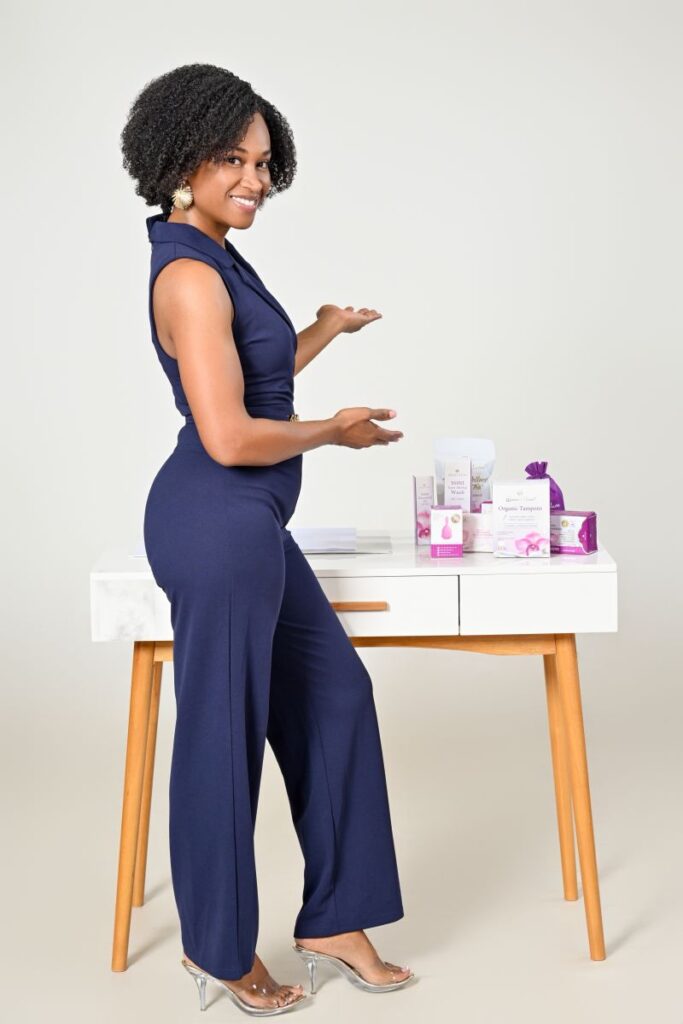
Adderley expanded into countries where nobody noticed. Bahamas. Trinidad. Third country. Fourth. It was not until her seventh or eighth market that people started paying attention.
In 2025, thirty million organic social media views. A grant from the Caribbean Development Bank’s SheTrades programme, the first institutional funding Women’s Haven had ever received. Recognition from rooms that had ignored her for years.
“Consistency is not built on luck. It’s built on habit. Even when you get to the middle and feel stuck, there were many days I didn’t know if we were going to make it. And then an order comes in somewhere. And I’d be like: thank you, Jesus. You just gotta keep going.”
The Recognition Followed the Work, Not the Other Way Around
In November 2025, Adderley was named Entrepreneur of the Year at the Cayman Islands Chamber of Commerce Business Excellence Awards, presented at the Kimpton Seafire Resort and Spa. She accepted the award on behalf of Women’s Haven, eight years after starting the company with no investors and no industry contacts.
Women’s Haven products are available at womenshaven.com, on Amazon, and in retail locations across fifteen Caribbean countries. To find a store: womenshaven.com/locations. Follow Melesia Adderley on Instagram: @MrsAdderley
Foundpreneur covers the Caribbean founder economy. Subscribe to The Foundpreneur Weekly at foundpreneur.co
Follow Stephen across social: LinkedIn | Instagram | YouTube
Follow Foundpreneur across social: LinkedIn | Instagram | YouTube
How a Caymanian Founder Built a 12+ Country Organic Feminine Care Brand With No Investors and No Blueprint
Melesia Adderley couldn’t find organic feminine care products in the Caribbean. Eight years later, Women’s Haven is in fifteen countries, over a hundred stores, and

Stephen Stanberry