She took over a 40-year family bakery, moved it from retail to B2B private label, and built a self-funded rice cake brand on the side. Now she’s teaching Caribbean businesses to measure AI in money.
Key Takeaways
- She Grew Up in a House That Ran Like a Business Accelerator
- The MBA Practicum Sent Her Straight Back to Bread
- A Venezuelan, a Haitian and Her Father Filled the First Order Over a Weekend
- Moving From B2C to B2B Was the Only Way to Save the Business
- Sulten Started With a Complaint She Overheard at the Gym
- She Wrote the AI Curriculum Herself, Then Rebuilt It From the Data
- The Backbone Behind the Build
- What She’d Tell a Founder in Their Own Car Park
- Melissa Pascal moved Pascal’s Bakery, a 40-year family business with 14 retail outlets, from consumer retail to B2B private-label supply, growing it to approximately US$1 million a year in sales as Trinidad and Tobago’s main ciabatta supplier.
- In 2019, she spent her last savings on a rice-popping machine she’d seen at a trade show years earlier and launched Sulten Manufacturing, now on shelves at SuperPharm, Massy Stores and Sea Foods Enterprise.
- Her applied AI curriculum has reached 148 learners at CTS College, and her BLUEPRINT program measures results in hours returned and revenue produced, not attendance.
The car was a Nissan Almera, licence plate PBJ 115. Melissa Pascal still remembers the number.
She was 25, walking across a car park in Port of Spain after losing more than $100,000 TT on a cafe she’d built in the heart of the city. For about a year, she and her mother had been up at 4 a.m. to cook. Her brother, the baker in the family, did his best with the ciabatta she wanted. It never worked. She drove out of that car park and called her mother, crying.
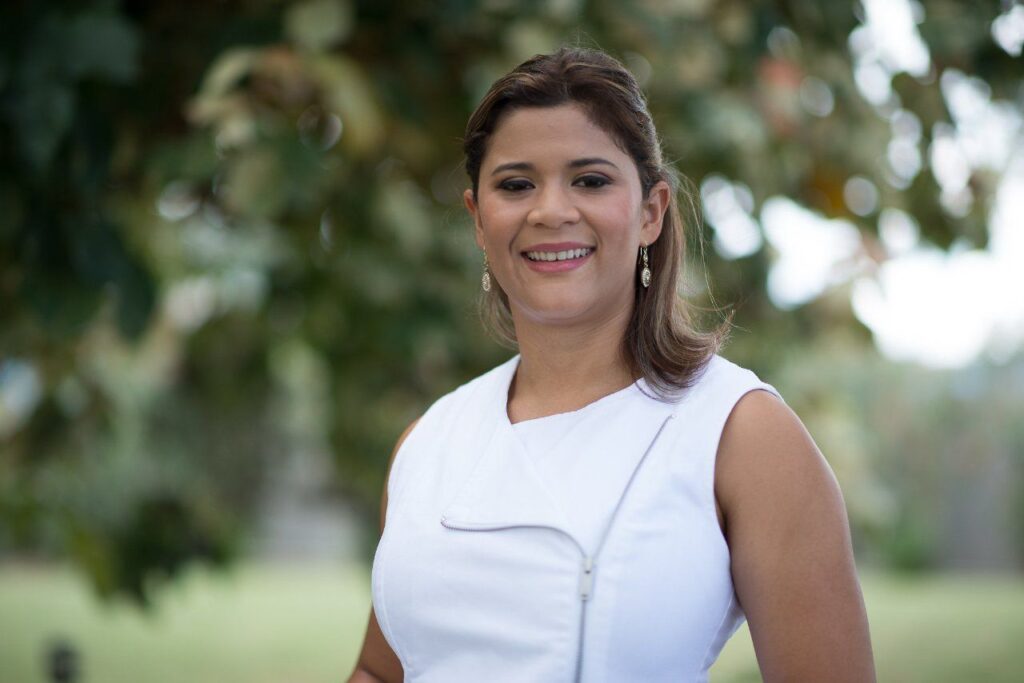
“I can still feel it,” she says. She’s 41 now, and she knows the cafe was ahead of its time. “What is ciabatta? What’s a panini? We still think a panini is just any bread that you squeeze together on a press.”
The loss didn’t end her relationship with ciabatta. It started it.
She Grew Up in a House That Ran Like a Business Accelerator
Pascal calls her childhood home a “self-proclaimed pressure cooker, business incubator, accelerator.” Every member of her immediate and extended family ran an established business, and business was what got discussed at the table. She was pitching her father from around the age of 6.
School didn’t come easily. She describes herself as a slow, dyslexic, D-grade student until her mother handed her The 7 Habits of Highly Effective People at 10. She’s been a voracious reader ever since, and her daughter now has a library of her own.
At York University in Canada, she turned $100 from a call centre job into a side business selling knockoff polo shirts to students, then imported sterling silver jewellery from Thailand. She finished her economics degree in 2008 believing she already knew how business worked.
The cafe corrected that. “You must be able to crumble and get back up,” she says.
The MBA Practicum Sent Her Straight Back to Bread
She paid for her own MBA in business development and innovation at the Arthur Lok Jack Graduate School of Business. She chose the program because it required a practicum, a real business model executed in the real world, and she was determined it wouldn’t involve the family bakery.
Then she sat with import data in Excel spreadsheets, years before ChatGPT, looking for a gap. Every answer came back to flour, water and bread. The thesis she built there still drives her work.
“If it is imported, the demand has been verified. Therefore, local manufacturing is the way.”
The data pointed to ciabatta. She went to a major trade show in Las Vegas and committed to specialised ciabatta equipment, for a highly hydrated dough she describes as “like a temperamental Italian woman.” People around her thought she was crazy. Her father didn’t take the idea on for about 2 years.
While she shopped the plan to large Caribbean companies, a mentor pressed her to hand over the business plan she’d rewritten 8 times. Months later, he told her: “Melissa, you remind me of my daughter. I’m not going to take this idea and run with it. I’m giving you the opportunity to execute this and I’ll buy from you.”
She was furious. She also had no choice left but to build it.
In between, she joined Scotiabank, rising from management trainee to business banking manager. “I could not be sharpened in an organization where I was the smartest or I was leading the charge,” she says. “I needed to be led.”
A Venezuelan, a Haitian and Her Father Filled the First Order Over a Weekend
Pascal took over Pascal’s Bakery as CEO in December 2017. There was no handover, and the company’s data had been held for a bitcoin ransom.
She already knew where the ciabatta belonged. Walking through PriceSmart, she had looked at an open section of shelving and decided “that space right there is where our ciabatta is going to be sold.” She found a newly arrived Venezuelan baker, then a Haitian baker, and the two of them and her father worked through a weekend to fill the first private-label order. Pascal’s supplied it for about 5 years, then added international franchise clients.
Moving From B2C to B2B Was the Only Way to Save the Business
To an outsider, keeping 14 retail outlets open looks like the safer path. Pascal says it wasn’t close.
The storefronts weren’t well run, and the market was consolidating as standalone bakeries were absorbed into supermarkets and larger groups. Staying in retail meant reinventing the shops as cafes or specialty stores, an investment the family wasn’t positioned to make.
“B2C is extremely costly,” she says. “You’re speaking about a lot more employees, a lot more moving parts, a lot more products.” Without systems, every moving part leaked money, and she doesn’t think the family even knew how much.
So she went after the largest bakeries in the country, businesses that looked like competitors, and pitched private label instead. “I always find the win-win solution,” she says. “I don’t operate in win-lose relationships. I despise those.” The size of the purchase orders that followed is what finally won over her father.
It wasn’t smooth. “If we were two men, we would have fought,” she says. A 40-year-old operation had no SOPs, no data and no systems for B2B production, and she admits she pushed it faster than it could go. She compares the bakery to a 30- or 40-year-old Toyota being asked to drive like a Porsche.
The restructure still worked. Pascal’s became the main ciabatta supplier in Trinidad and Tobago, with major brands putting their own labels on its bread, and sales grew to approximately US$1 million a year.
In 2024, sitting in the factory office with her accountant, she made the call to end production. A B2B model needs a deep product pipeline, and an island market with one or two major customers carries real concentration risk. She calls it one of the loneliest decisions she’s ever made.
Sulten Started With a Complaint She Overheard at the Gym
In 2019, a foreign exchange shortage had cleared imported rice cakes off shelves across Trinidad and Tobago. Pascal heard someone complain about it mid-workout, and a memory surfaced. Years earlier, she’d stood on a trade show floor watching a rice-popping machine at work.
“I know that machine. I’ve seen that machine. I know exactly where to go,” she remembers thinking.
She bought it with her last savings, picked it up herself and drove it to the bakery. As the forklift lifted it off, her father came outside and shook her hand. “Melissa, good luck,” he said, then asked how she planned to run both businesses.
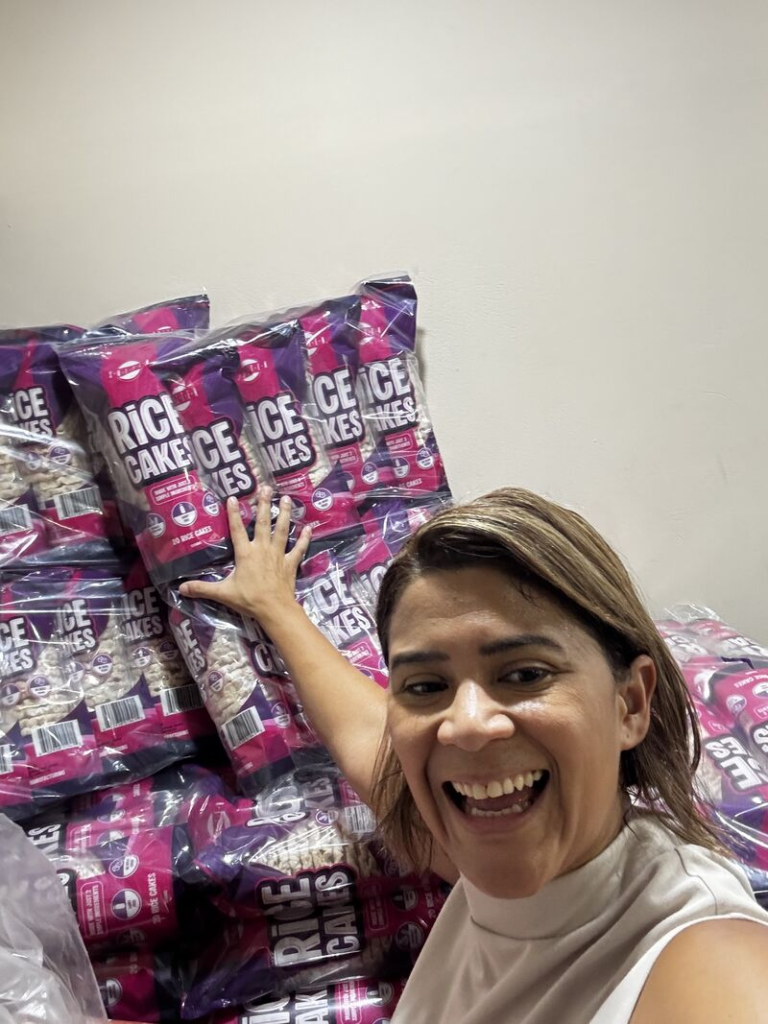
The answer was to run them together. During her years at the bakery, Sulten became a revenue stream feeding Pascal’s. Her younger brother, now in England and the stronger product developer of the two, helped launch the first product, which went out with borrowed stickers.
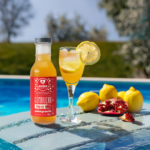
Launched mid-pandemic and self-funded from day one, Sulten now competes with an imported multinational brand at SuperPharm, Massy Stores and Sea Foods Enterprise nationwide. The line has grown to include Sulten Mallows and Golden Crumbs coatings, and CARICOM export labelling is under way.
She Wrote the AI Curriculum Herself, Then Rebuilt It From the Data
Her first AI tools were for her own business, starting with a receivables system that fixed the cash flow drag of chasing payments by email. When one of Sulten’s machines kept breaking down, she uploaded its 50-page manual and built an AI technician, then stood beside her repairman with a spanner and guided him through the fix.
She realised the skill was worth teaching. She emailed 4 or 5 colleges, and CTS College of Business and Computer Science replied. She pitched, demoed and won the contract for “Enhancing Business Productivity with AI,” and she has taught every cohort herself: 148 learners across 4 cohorts since September 2025, the largest with 71 people, and a fifth already contracted.
The assessment data from those cohorts became BLUEPRINT, a 5-session program for owner-operators who have sat through AI talks and built nothing. Each participant brings one live problem and leaves with an AI “right hand” trained on their own business. In the first cohort, a first-time farmer built a 52-week staggered planting model for 2,160 plants. Results are scored in task time returned, revenue produced and expenses removed.
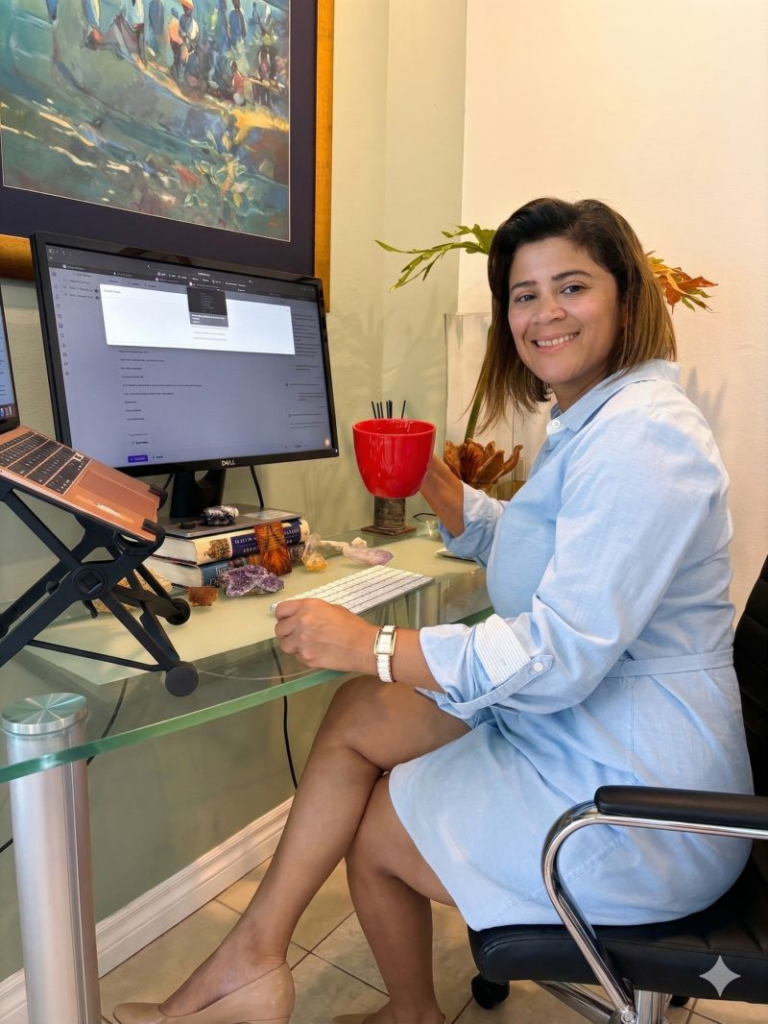
The reason is personal. She spent $20,000 to $30,000 on consultants trying to turn the bakery around. “You are taking your last $5,000 to get results,” she says. “If I had an AI right hand in those times, I would have been my own consultant.”
The Backbone Behind the Build
Pascal is clear that she isn’t doing this alone. “My amazing husband, he is there, supporting in the darkest of times,” she says. “He’s the backbone.” Her parents handle school pickups and help raise her daughter,.
She trains, journals constantly and sits in silence at Blessed Sacrament. Asked what building has cost her, she doesn’t hesitate. “I had to die many times.”
What She’d Tell a Founder in Their Own Car Park
She still sees the gap the region hasn’t closed. Caribbean bank capital, she says, “is not failure capital,” and local manufacturers sit on an advantage nobody is scaling. “Breadfruit, winner. Mango, winner,” she says, naming produce that should be agro-processed at the level she brought to bread and rice.
As for the 25-year-old in the Almera, her advice is short.
“It will hurt, it will form a scar, you will heal and you’ll be okay. It’s just a war wound and that’s life. Get over yourself.”
Check out the full convo on wherever you listen your podcast YouTube Spotify Apple.
Connect with Melissa Pascal on LinkedIn and Instagram. BLUEPRINT: blueprintcaribbean.com
Know a Caribbean founder building something the region hasn’t seen yet? Tell us: hello@foundpreneur.co

Stephen Stanberry