Keithlin Caroo-Afrifa grew up in a Saint Lucian farming community where the women who raised her worked without recognition, training, or anyone fighting for their seat at the table. She went to the United Nations. Then she came home and built something the Caribbean had never seen.
Key Takeaways
- Caroo-Afrifa Joined the UN at Twenty-Five and Realized Almost Immediately That She Was in the Wrong Room
- She Held the First Rural Women’s Summit in Saint Lucia During Carnival Season With Borrowed Money. The Women Showed Up.
- The Name Is an Argument. So Is the Word Farm Hers.
- Helen’s Daughters Operates Across Five Countries Through Four Interventions and a Model Built on Trust
- The Organization Has Been Featured by Forbes, the BBC, and National Geographic. The Caribbean Has Been Slower to Notice.
- Caroo-Afrifa Is Now Converting Helen’s Daughters Into a Social Enterprise. The Caribbean Has Almost Never Seen This Done.
- Keithlin Caroo-Afrifa, MBE, founded Helen’s Daughters in 2017 from off the side of her desk at the United Nations, using her own time, her own money, and borrowed funds from her parents to hold the first rural women’s summit in Saint Lucia.
- Helen’s Daughters has trained over six thousand women across five Caribbean countries through its free ten-week Academy programme, which is now recognized by the Saint Lucia Ministry of Agriculture as a substitute for the government’s GAAP certification.
- Caroo-Afrifa is now working to convert Helen’s Daughters from a grant-dependent nonprofit into a social enterprise, a transition the Caribbean development sector has almost never seen done successfully at this scale.
The place she is from is called Faux.
It sits in the district of Babonneau in Saint Lucia, a name that means ridge of good water. The community itself was named after a freed slave called Aso the African, who bought his freedom, bought a swath of land, and raised his family there. Keithlin Caroo-Afrifa grew up in that land. Her grandfather was recognized as one of the best farmers in the area. Her grandmother farmed alongside him, sold at the market, and did, in Keithlin’s words, ten thousand other things on top of that.
Nobody acknowledged her grandmother for it.
Nobody trained her. Nobody funded her. Nobody fought for her seat at any table.
That detail, ordinary to most people, foundational to Keithlin, is the reason Helen’s Daughters exists.
Caroo-Afrifa Joined the UN at Twenty-Five and Realized Almost Immediately That She Was in the Wrong Room
She had dreamed of the United Nations since a classmate at a parent-teacher meeting told her father she could see Keithlin there one day. The comment ignited something. She laser-focused. She completed her masters degree and joined the UN at twenty-five.

The internship was unpaid. She almost got evicted because she diverted rent money just to survive in New York. She watched peers buy ten-dollar Starbucks while she stretched every dollar. She recognized that removing the baseline of a living stipend meant the UN was only attracting people from certain socioeconomic backgrounds brilliant, yes, but not representative of the small island developing states she came from.
She moved up the ladder anyway. Her final portfolio was in the office of the President of the General Assembly, where she served two presidents, one from Nigeria and one from Turkey. She describes that office as a grooming ground for her grit and hustle.
But the work did not feel meaningful.
“I’m somebody that really wants to see change rather quickly and I wasn’t able to experience that at the heart of bureaucracy in New York.”
UN Women had a programme for change makers. She applied. Flashbacks to her grandmother, her mother, the rural women in her community. She started to see what she wanted to do. Not what the path was asking of her. What she actually wanted to do.
She pitched the idea of rural women’s economic empowerment and started building it off the corner of her desk.
She Held the First Rural Women’s Summit in Saint Lucia During Carnival Season With Borrowed Money. The Women Showed Up.
July 2017. Keithlin was still at the UN. She used her own funds, a contribution from a trade union, and money borrowed from her parents to hold the first Helen’s Daughters rural women’s summit in Saint Lucia.
She opened it to fifty women. It was carnival summer. Everyone told her nobody would come.
“It was a carnival summer and everything else, and nobody’s thinking of that. But the women showed up.”
The following year she launched the Academy, a free, ten-week programme, twice a week, covering climate resilience, water and soil health management, business development for agriculture, agritourism, financial literacy, and intellectual property.
All of it is free.
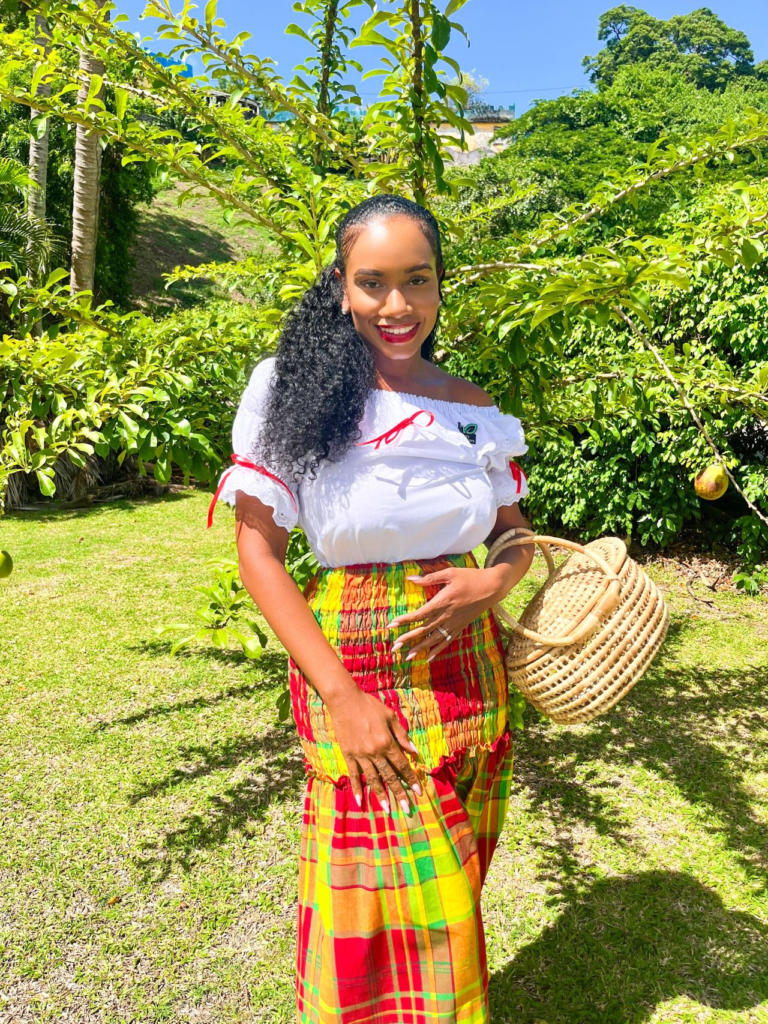
Meanwhile she was still at the UN, still working late nights in the General Assembly’s office, still running Helen’s Daughters on the margins of everything else. She had applied to Ashoka, a fellowship that funds social entrepreneurs to build full-time and heard nothing for two years. Then in October, they called. By December she had given notice. By February 2021, she was back in Saint Lucia during the pandemic.
“It just kind of blossomed from there.”
The Name Is an Argument. So Is the Word Farm Hers.
Saint Lucia was fought over fourteen times. Seven times British, seven times French. The island became known as the Helen of the West Indies, almost like Helen of Troy so desirable it was contested at every turn. As Saint Lucians learn as children, Helen is woven into the island’s identity. Derek Walcott, Saint Lucia’s Nobel laureate, rewrote the Odyssey in a Caribbean context with Helen as a central character.
Keithlin borrowed the name deliberately.
When she expanded the organization regionally, she researched further and found that Helen means light. The reframe held.
“We look at it as we’re bringing light into the agricultural sector.”
The term Farm Hers instead of farmers came from a specific moment. She was pitching the work to someone at a Ministry of Agriculture who told her: women don’t farm, they vend. They just resell produce. The attitude was the same one her grandmother had faced. The same shame attached to women in agriculture that made them reluctant to claim the title.
“It was almost to sort of like celebrate women in agriculture and for them to have their own title and name.”
Both naming decisions are editorial arguments. Every time Keithlin uses those words she is making a claim about who these women are and what they deserve.
Helen’s Daughters Operates Across Five Countries Through Four Interventions and a Model Built on Trust
The organization now operates in Saint Lucia, Saint Kitts and Nevis, Saint Vincent and the Grenadines, Grenada, and Dominica. The expansion came through partnerships first, the University of the West Indies subcontracted Helen’s Daughters to run programmes in Saint Kitts and Saint Vincent, which opened the door. Each country has a national coordinator who serves as eyes and ears on the ground.
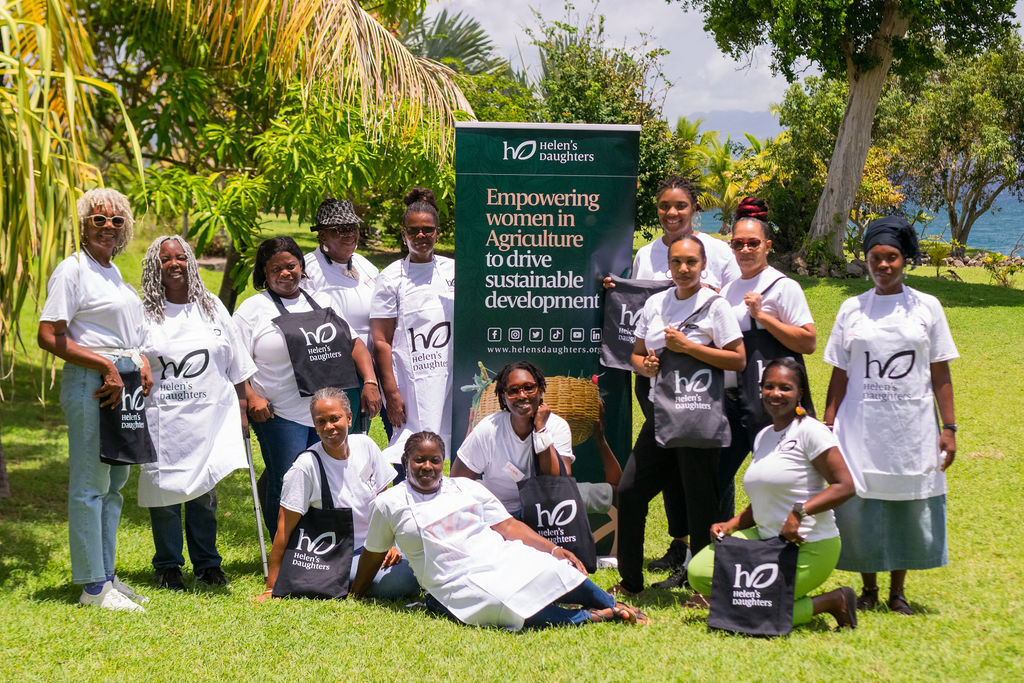
The model runs on four interventions: Grow, Thrive, Earn, and Belong.
Grow covers all capacity development. The Academy is the flagship — free, ten weeks, open to members and non-members. Helen’s Daughters also just completed a three-phase herbalist training programme in which farmers graduated as certified herbal physicians. The Academy certificate is recognized by the Saint Lucia Ministry of Agriculture as a substitute for the government’s GAAP programme, meaning graduates can use it to obtain their registered farmer ID.
Thrive addresses women holistically. Helen’s Daughters provides free telecounseling slots for farmers and staff every month, paid out of core operating costs. When hurricanes and disasters hit, a disaster fund enables the organization to respond with cash and voucher assistance.
Earn connects Farm Hers to income. Farm Hers Markets run twice monthly in Saint Lucia and quarterly in Saint Kitts and Saint Vincent. Long-term relationships have been brokered with supermarkets, hotel chefs, and cruise lines.
Belong creates sisterhood. Town halls, co-creation retreats, annual general meetings where the community designs the following year’s programming alongside staff.
“We treat community almost as infrastructure. Having a belonging, having a sisterhood makes all the difference in a sector like this.”
The Organization Has Been Featured by Forbes, the BBC, and National Geographic. The Caribbean Has Been Slower to Notice.
Helen’s Daughters has received international recognition that most Caribbean organizations spend decades working toward. Forbes. The BBC. National Geographic. Keithlin holds an MBE. She is an Echoing Green Fellow, an IICA Goodwill Ambassador, and a board member of the Equality Fund, one of the world’s largest feminist funds.
The Caribbean’s own relationship to the work is more complicated.
“The Caribbean isn’t at a point where we necessarily value the contributions of civil society. It should be a social partnership — government, private sector, and civil society working in tandem. I don’t think we’re there yet.”
She is not bitter about it. She is precise about it. She notes that Caribbean nations are still very young, that mindsets toward civil society organizations are changing, and that governments will eventually recognize that homegrown organizations can serve genuine purposes that the UN and international bodies cannot.
Caroo-Afrifa Is Now Converting Helen’s Daughters Into a Social Enterprise. The Caribbean Has Almost Never Seen This Done.
The USAID cuts across the region in 2025 made something visible that Keithlin had already known: grant dependency is not a sustainable model. Helen’s Daughters is currently at approximately 10% self-generated income through merchandise and agritourism interventions. She is working to change that ratio.
“It’s not sustainable to be solely dependent on grant funding. We need diversified income streams, including streams we’re generating ourselves.”
The transition from nonprofit to social enterprise is one of the most difficult organizational evolutions in the development sector. In the Caribbean, it has almost never been done at scale. Keithlin is building toward it with the same deliberateness she has brought to everything else not loudly, not with a pitch deck, but with systems, coordinators, and the patience of someone who has watched women farm for generations without recognition and decided the recognition could wait if the work was right.
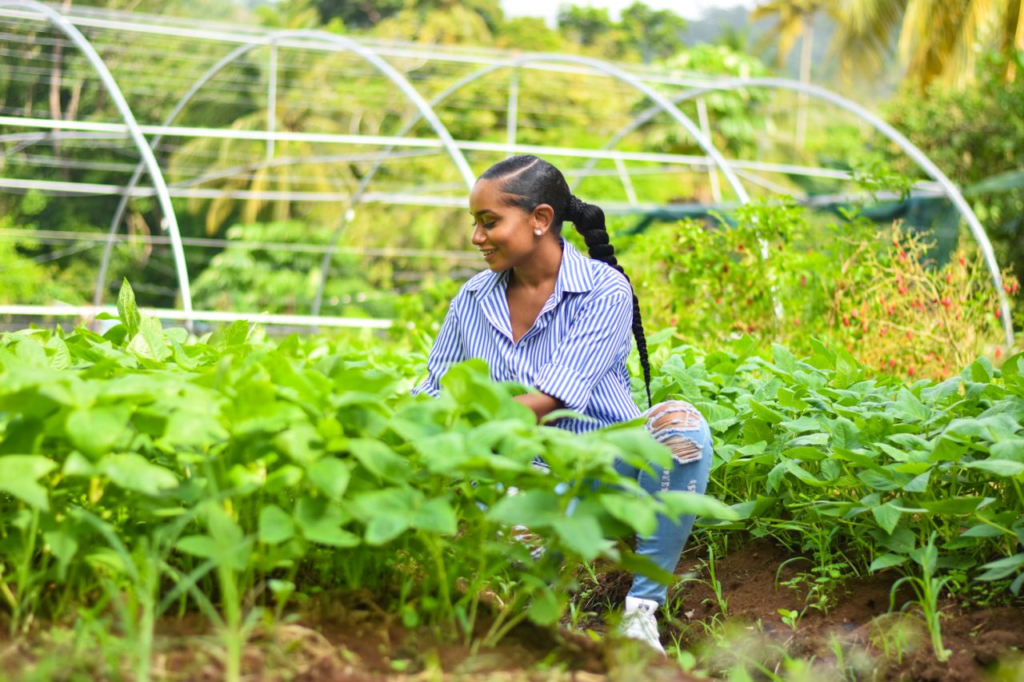
She burned out twice building this. She lost time with family she is only now reclaiming. She has learned, she says, that prayer, exercise, and intentional presence with her loved ones are not optional.
“The people that you love will not always be there.”
Jamaica has been calling. The Jamaica Network of Rural Women Producers has expressed interest in collaboration. Two to three more countries are on the horizon in the next few years.
The girl from Faux, from the ridge of good water, from the land that a freed slave named Aso the African once bought and built a family on, is not done.
“If I was a little girl growing up in that community and knowing that somebody came from that community, I probably wouldn’t have lacked confidence when I was younger. I probably would have shot for the stars much younger. Representation really does matter.”
Helen’s Daughters: helensdaughters.org | Instagram, TikTok, LinkedIn, Facebook: @HelensDaughters
Follow Keithlin Caroo-Afrifa: @keithlincaroo
You can watch/listen the full conversation with Keithlin on the Foundpreneur podcast.
YouTube Apple Spotify
Foundpreneur covers the Caribbean founder economy. Subscribe to The Foundpreneur Weekly at foundpreneur.co

Stephen Stanberry